
Bexar County Three-Day Method
The Bexar County Sheriff's Office does not publish a standalone rolling 72-hour release screen. Instead, its Jail Activity Reports page presents seven dated pairs of Bookings and Releases CSV files. Choose three consecutive Releases files for an approximate three-day view. This is a reader-created time window, not an official product named the “Bexar County 72 hour list.”
Report headings and row dates may differ by a day, so count from ReleaseDate and ReleaseTime inside the CSV. A weekend check may require the latest Friday, Saturday, and Sunday activity files, while an exact trailing 72 hours can cross four report headings. BCSO does not publish an intraday refresh promise, and it warns that processing stage can delay what appears.
Use the wider window when the Released Last 24 Hours check is too narrow. For older dates, move quickly to a records request because only seven daily links remain online.
Search Bexar 72 Hour Releases
Download only Releases files. The adjacent Bookings file documents people entering the process and cannot prove that they later left. Search each file with the same identifiers and keep a simple note of the report heading, row timestamp, SO number, case number, and release type.
- Open the official BCSO report page and identify the three dates that overlap the period.
- Download each dated Releases CSV, including an adjacent file if a boundary is uncertain.
- Search for the surname and verify the person through SO number, case, court, and offense.
- Group every row carrying that SO number across all selected reports.
- Order the matched rows by ReleaseDate and ReleaseTime, not by link heading.
- Check each case in the Justice Information Portal and trace any receiving agency.
Do not republish whole rows. The file includes an address, yet that field is unnecessary for release verification. A case number or SO number is a safer match. If two people share a name, obtain another identifier before drawing a conclusion.
Bexar Three-Day Release Fields
The official data is charge-oriented. One person may have several rows because each case or charge carries its own offense, bond, and release information. “All Charges Released” refers to the listed Bexar booking rows. It does not mean acquittal and cannot rule out a federal, immigration, state, or other-county hold.
| Field group | Use in a three-day check |
|---|---|
| SONumber, InmateName | Group the same Sheriff's identity across dates and charges. |
| ReleaseDate, ReleaseTime | Place the exit inside or outside the exact 72-hour interval. |
| ReleaseType | Read the listed custody mechanism without treating it as a verdict. |
| CaseNumber, Court, AttorneyName | Connect the row to the correct criminal case. |
| OffenseDescription, OffenseDate | Identify which charge the row concerns. |
| BondType, BondAmount, BondsmanName | Review bond details by charge where present. |
No destination, date of birth, or photograph field appears in the CSV. Destination and hold details may require a jail chronology. The court portal supplies disposition and judgment facts. A booking photo follows a separate records-request route.
Bexar Weekend Release Timing
A three-day view is valuable after weekends and holidays because a single newest file can miss an earlier departure. Yet Bexar publishes no universal release hour or holiday schedule. The Justice Intake & Assessment Annex works around the clock, but physical book-out can still depend on bond approval, warrants, identity checks, property, and other holds.
The report date is not a promise that every release during that calendar day appears at once. Inspect the next dated file when a known departure does not appear, then call BCSO's inmate and bond line at 210-335-6201 with full name and date of birth. The Central Magistrate screen covers arrests processed in the preceding 24 hours. Its disappearance rule is merely a display limit, not evidence of release.
Community pickup planning should remain flexible. Bexar County publishes no common exit door or family waiting point. The Reentry Center recommends arranging safe pickup for the first day after release, but the actual BCSO timestamp is the reliable event record.
Bexar Reports Expire Quickly
The online series retains no more than seven dated activity reports. That short public window is distinct from legal retention. Under the Texas State Library's Local Schedule PS, the county jail register is permanent and includes core intake and release or transfer facts. Booking and release files generally remain for at least two years after release or transfer.
For older records, use Bexar County's request route. State the name, date of birth or SO/SID number, and approximate booking and release range. Ask for existing book-in/book-out chronology, exact release time and type, destination or transfer data, and hold entries. Electronic copies and an itemized estimate keep the request focused.
BCSO Central Records lists 210-335-6301 for its supervisor and 210-335-6302 for research questions. The jail at 200 North Comal Street is staffed continuously, but that does not promise continuous records-counter service.
The BCSO Central Records page identifies the durable request channel shown below.
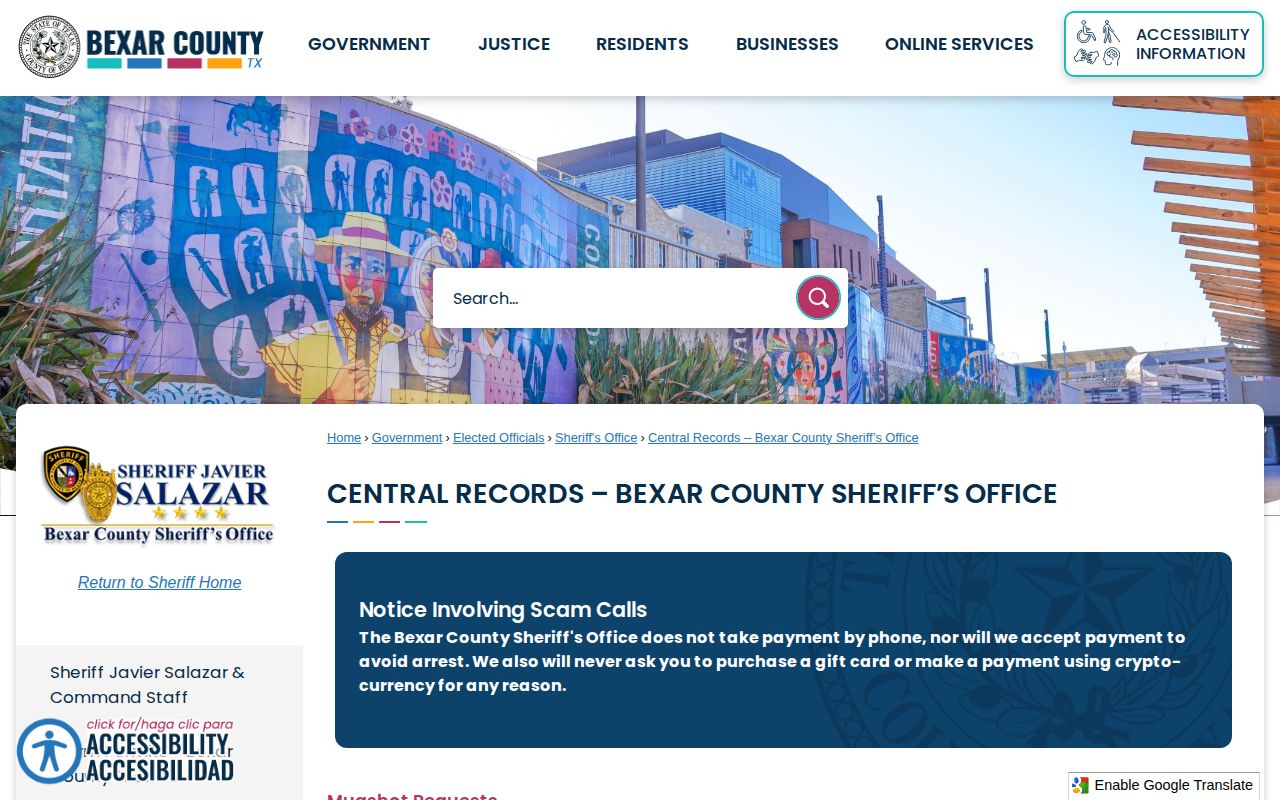
That route preserves access after the three daily CSV links needed for a particular weekend have rotated off the page.
Bexar Release or Continued Custody
Leaving the county jail is not always freedom from custody. A transfer row ends the Bexar episode but can begin or continue confinement elsewhere. Search TDCJ only when state-prison custody is relevant. Its online search covers current prisoners, so absence alone does not prove discharge. For federal custody, use the BOP locator and federal docket. For a possible immigration transfer, use the ICE locator and agency assistance.
| Evidence | What it establishes | What to check next |
|---|---|---|
| BCSO release timestamp | The listed local booking or charge left Bexar custody. | All charge rows, warrants, holds, and destination. |
| Court disposition | The public outcome or latest action in the prosecution. | Physical book-out if that remains uncertain. |
| Receiving-agency record | Continued state, federal, immigration, or other custody. | That system's later release or supervision record. |
A bond release means a qualifying custodial restraint was resolved pending court. Time served relates to credited custody. A transfer is continued confinement elsewhere. None should be rewritten as a case disposition. Pair the jail timestamp with the judgment or dismissal when the question concerns what happened in court.
Bexar Sheriff App Scope
The official BCSO app does not provide a documented substitute for the three-file method. Current store text mentions news, reports, tips, and public-safety information, but not inmate search, recent releases, or mugshots. The release CSV and Central Records remain the official routes described by Bexar County.
The official Apple listing shows that stated scope in the image below.
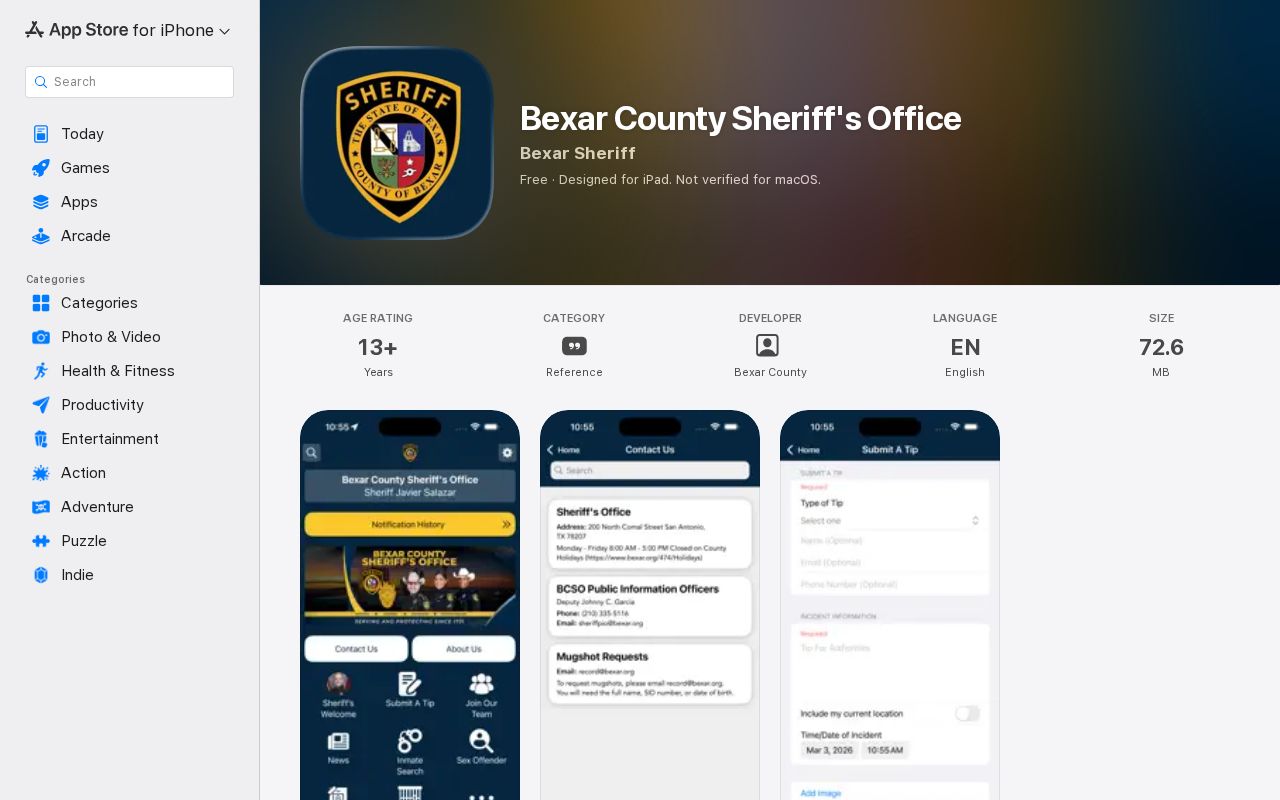
Do not assume an app-only release feature unless a later official version clearly adds and describes one.
The three-day method should begin with a fixed interval. Record the current date and time, then set an endpoint 72 hours earlier. Choose each dated Releases file that may overlap that period. Three files often cover three calendar dates, but an exact trailing interval can cross part of a fourth report. Keep or exclude a row by ReleaseDate and ReleaseTime, not merely by the file heading.
Across those files, one person can appear on several charge rows. Group the records by SO number, preserve each case number, and order distinct entries by timestamp. Do not count the number of rows as the number of people released. When a repeated name appears on another date, compare the case, court, offense, and identifiers before deciding whether it is delayed processing or a later custody episode.
This is what separates the 72-hour check from the newest-file method. The wider view catches a departure that falls before the latest daily boundary and gives room for a weekend or processing lag. It is not more current than the newest source. BCSO promises no intraday refresh, and its booking-stage warning applies to each file in the group.
If a known release is absent, inspect the adjacent report date and call the inmate and bond information line with the full name and date of birth. Do not substitute the Central Magistrate search. That search covers arrests processed during its own 24-hour window, so aging out only shows that the intake display expired. It does not document a release.
When the three needed files rotate off the seven-day page, the underlying record path remains. Identify the full 72-hour date range in a focused request and include the SO number, case numbers, and known booking facts. Ask for existing book-in and book-out chronology, release time and type, hold entries, and transfer or destination fields. The permanent jail register and booking-and-release retention bridge the short online window.
A matched row also needs a custody check. “All Charges Released” addresses the listed Bexar rows, not an acquittal or a promise of community return. Review all cases and holds. If the record points to another county, TDCJ, a federal authority, or ICE, follow the receiving system. Date any later warrant or arrest separately because a new event does not erase the earlier release timestamp.
Public Record Search
Sponsored Results